
No Access to Invisalign? 3 Alternatives Available.
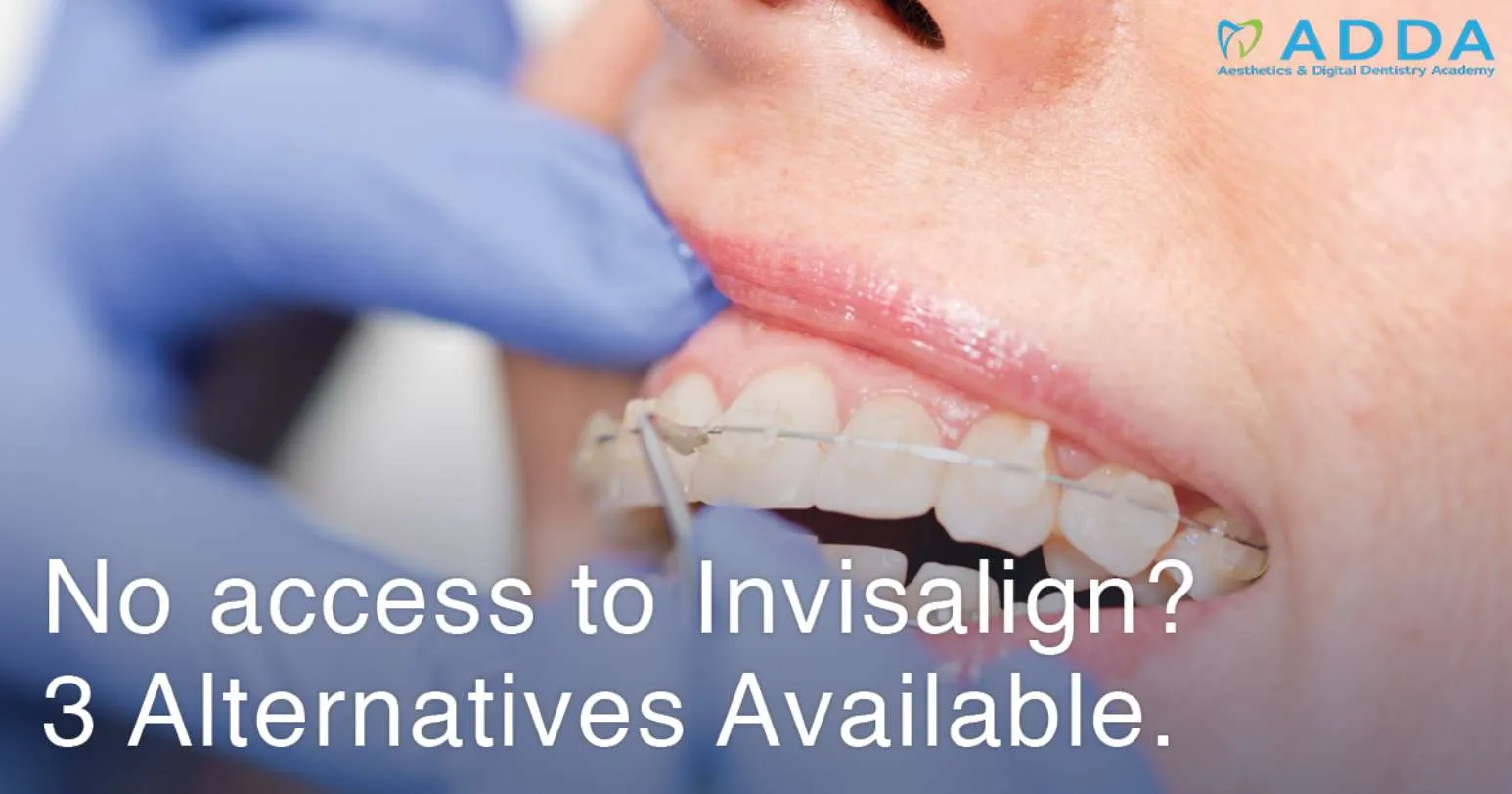
Exploring Your Orthodontic Options
Invisalign clear aligners have revolutionised orthodontics, offering a discreet, removable alternative to traditional braces. However, Invisalign isn’t suitable or accessible for everyone. Whether due to cost, the complexity of your case, or clinical recommendations, you might need to explore other options. The good news? Proven, effective alternatives exist.
If you’re unable to access Invisalign or your orthodontist recommends a different approach, understanding your options is essential. Each alternative has distinct advantages and trade-offs. Let’s explore the three primary types of braces available today.
1. Traditional Metal Braces
Traditional metal braces remain the most popular orthodontic solution worldwide, and for good reason: they’re the most affordable option and incredibly effective across a wide range of cases.
How They Work
Metal braces consist of small metal brackets bonded to each tooth, connected by a metal wire that guides teeth into their new positions. Periodically, you’ll visit your orthodontist to have the wire tightened, gradually moving your teeth.
Advantages
- Cost-effective: Most affordable orthodontic option
- Highly effective: Handle complex cases that other systems might struggle with
- Durable: Built to withstand significant pressure
- Versatile: Work for nearly all patient demographics, regardless of age
Disadvantages
- Visibility: Clearly visible when you smile or speak (though this matters less to many people than it once did)
- Discomfort: As noted in recent research, they tend to cause more discomfort than alternatives
- Maintenance: Require careful brushing and flossing around brackets and wires
- Dietary restrictions: Certain sticky, hard, or crunchy foods must be avoided
Traditional braces remain an excellent choice if cost is your primary concern or if your orthodontic needs are complex.
2. Ceramic Braces
Ceramic braces are a middle-ground option—they function identically to metal braces but with an important aesthetic improvement: the brackets are tooth-coloured, making them far less noticeable.
How They Work
Ceramic braces operate on the same principle as metal braces: brackets bonded to teeth with a connecting wire. The primary difference is materials—ceramic brackets blend with your natural tooth colour.
Advantages
- Aesthetic: Much less noticeable than metal braces
- Effective: Handle complex cases like traditional braces
- Moderate cost: More expensive than metal but less than Invisalign or lingual braces
Disadvantages
- Staining risk: Ceramic can stain if not meticulously maintained
- Fragility: Ceramic brackets are more brittle than metal and can chip
- Discomfort: Similar to metal braces in terms of pain levels
- Maintenance: Equally challenging to clean around as metal braces
Ceramic braces are ideal for patients who want better aesthetics than metal braces but need strong control for complex cases.
3. Lingual Braces
Lingual braces represent the most discreet fixed-appliance option: they’re bonded to the back (lingual) surface of your teeth, making them essentially invisible from the front.
How They Work
Rather than being attached to the front of teeth like traditional braces, lingual brackets are affixed behind your teeth, where they’re hidden from view. A wire connects these back-placed brackets to guide teeth into position.
Advantages
- Complete invisibility: No one can see them unless you specifically show them
- Effective: Handle complex cases requiring fixed appliance control
Disadvantages
- Extremely expensive: Typically the most costly orthodontic option
- Uncomfortable: Hidden placement means braces irritate your tongue and inner mouth
- Speech impact: Many patients experience slight speech difficulties initially
- Difficult cleaning: Reaching back-placed brackets with a toothbrush is extremely challenging, leading to higher cavity risk
- Specialist requirement: Not all orthodontists offer lingual braces; those who do often charge premium fees
Lingual braces suit patients who absolutely cannot compromise on aesthetics and have the budget to match their aesthetic priorities.
Choosing the Right Option for You
Your ideal choice depends on several factors:
Choose traditional metal braces if: Cost is your primary concern, your case is complex, or you don’t mind visible brackets
Choose ceramic braces if: You want better aesthetics than metal but need strong treatment control
Choose lingual braces if: Invisibility is non-negotiable and budget isn’t a constraint
Professional Guidance is Essential
While this overview provides general information, professional advice from a skilled, registered dentist or orthodontist is indispensable. Every person’s dental anatomy is unique. Your orthodontist will assess your specific situation—including the complexity of your case, your bite issues, your oral health, and your lifestyle—to recommend the best option for you.
Don’t settle for the first recommendation. If you have concerns, ask your orthodontist about all available options and the pros and cons specific to your situation. The right choice is the one that aligns with your needs, budget, and lifestyle.