
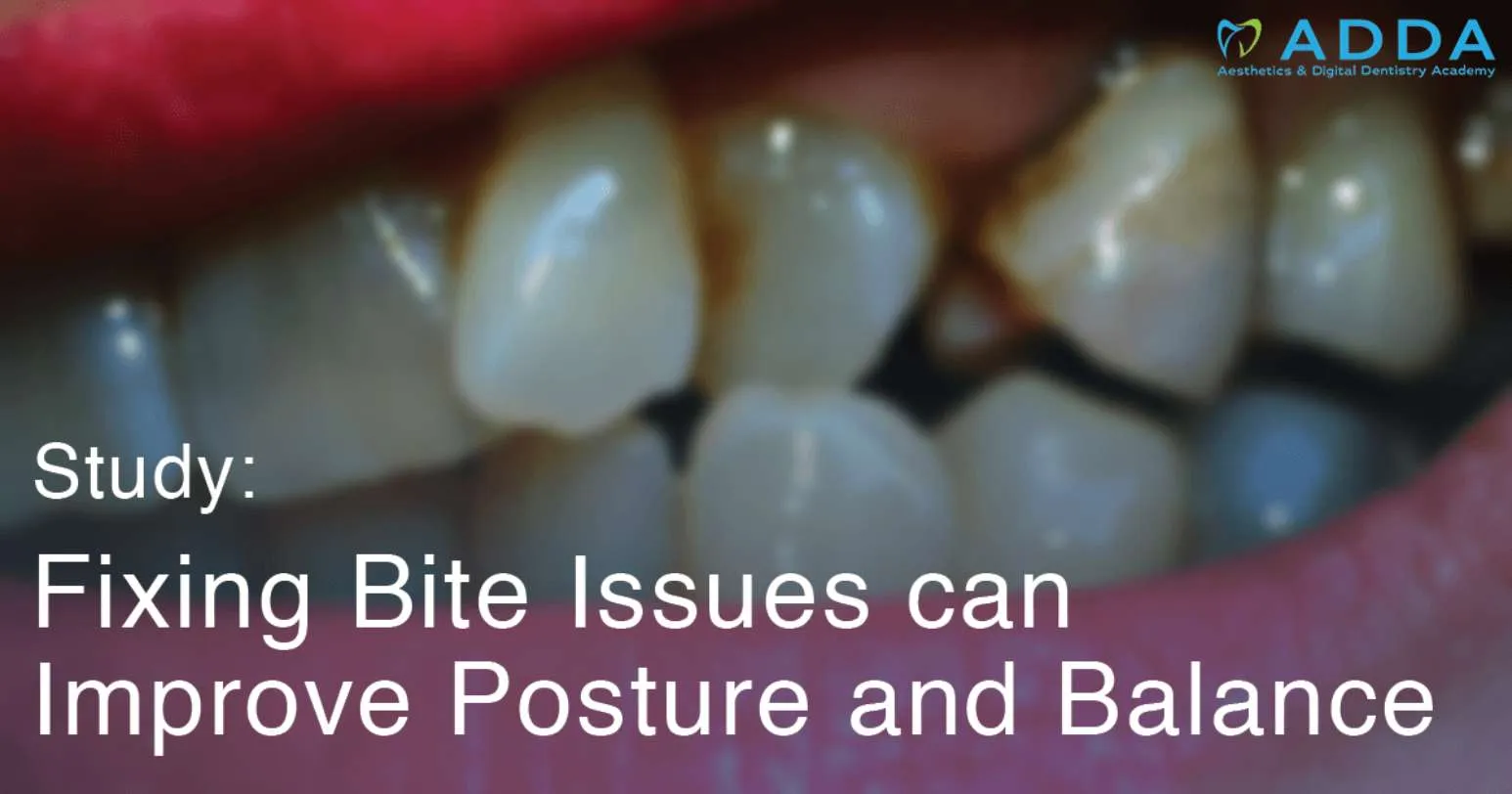
Study: Fixing Bite Issues Can Improve Posture and Balance
An Unexpected Connection: Your Bite and Your Balance
Most people don’t think of their bite when considering posture and balance. Yet emerging research suggests a fascinating relationship: the way your teeth meet profoundly influences how your body positions itself in space. When your jaw is properly aligned, your whole body is more comfortable, more stable, and better positioned for optimal function.
Two independent research teams—one at the University of Innsbruck in Austria and another at the University of Barcelona in Spain—conducted separate studies that both reached similar conclusions: malocclusion (misaligned bite) is correlated with poor posture and balance problems. These aren’t minor associations; they represent meaningful physiological connections that have real implications for your health.
The University of Innsbruck Study
Researchers at Austria’s University of Innsbruck investigated the relationship between jaw position and body posture. They recruited participants with varying degrees of malocclusion and assessed their postural alignment and stability using advanced biomechanical measurement tools.
The findings were striking: patients with misaligned bites showed measurably worse posture. Specifically:
- Forward head posture was more common in malocclusion patients
- Spinal curvature abnormalities were more prevalent
- Postural muscles showed evidence of asymmetrical tension patterns
- Overall body alignment was compromised
Researchers proposed a biomechanical explanation: when your jaw is misaligned, your head compensates with forward positioning to optimise your bite. This forward head posture creates a cascade effect—if your head is forward, your whole spine must adjust, your shoulders follow, and your entire postural alignment is disrupted.
The University of Barcelona Study
The University of Barcelona team took a slightly different approach, focusing specifically on balance and proprioception (the sense of where your body is in space). They studied patients with various malocclusion patterns and assessed their balance, equilibrium, and postural stability.
Their findings paralleled the Innsbruck research: malocclusion was significantly correlated with impaired balance and increased proprioceptive error. Patients with bite problems showed:
- Reduced stability on balance tests
- Greater tendency to sway during standing
- Poorer performance on proprioceptive assessments
- Increased fall risk, particularly in older populations
The Barcelona team proposed that the trigeminal nerve—a major cranial nerve with connections to balance and proprioceptive centres in the brainstem—plays a critical role. When the jaw is misaligned, it sends proprioceptive signals indicating abnormal position, potentially confusing the balance systems that rely on accurate sensory input.
The Mechanism: Why Bite Affects Posture and Balance
Understanding how bite problems impact posture and balance requires understanding the intricate neurological connections:
The Jaw-Spine Connection
Your jaw and spine are deeply interconnected through muscle and neural pathways. The muscles controlling your jaw (the masseter, temporalis, and others) are coordinated with cervical spine muscles. When jaw position is abnormal, these muscles work harder, creating tension patterns that ripple through your entire postural system.
The Trigeminal Nerve
The trigeminal nerve (cranial nerve V) provides sensory information from your jaw and teeth. This sensory input feeds directly into the brainstem’s balance centres. When jaw position is abnormal, it constantly sends “incorrectness” signals, making your balance system work harder and less effectively.
The Proprioceptive System
Your body constantly monitors jaw position through proprioceptors (sensory receptors in muscles and joints). A misaligned jaw position becomes the “normal” reference point your brain uses. Your entire postural system then organises itself around this abnormal reference, leading to compensatory posture and balance problems.
Forward Head Posture
Perhaps most significantly, malocclusion often leads to forward head posture—where your head extends forward relative to your spine. This single postural change cascades through your entire body:
- Increases strain on cervical spine muscles
- Increases intracranial pressure
- Impairs lung function and breathing
- Changes how all spinal structures bear load
- Disrupts hip and lower-body alignment
When Your Jaw Is in Neutral Position
The research indicates something remarkable: when the jaw is positioned in a neutral, aligned position, the body is more comfortable and better aligned. Patients who had their bite problems corrected through orthodontic or restorative treatment reported:
- Improved posture
- Better balance and stability
- Reduced back and neck pain
- Improved sleep quality
- Greater overall comfort
This suggests that proper bite alignment isn’t just an aesthetic or dental concern—it’s a fundamental component of postural health.
Treatment Options for Bite Correction
If you have bite problems (malocclusion), several treatment options can correct your bite:
Invisalign Clear Aligners
For mild to moderate bite issues, Invisalign can gradually move your teeth into proper alignment, establishing correct jaw relationships. The advantage is that correction happens gradually, allowing your postural system to adapt.
Porcelain Veneers
Veneers can correct minor bite issues by reshaping tooth surfaces and improving how teeth meet. While veneers don’t move teeth dramatically, they can optimise bite relationships in cases with minor misalignment.
Traditional Fixed Appliances
For complex bite problems, traditional braces or lingual braces provide the strongest force and greatest control, enabling correction of severe malocclusion that other systems cannot address.
Restorative Treatment
In some cases, careful restoration or reshaping of existing teeth can optimise bite relationships without major tooth movement.
Beyond Teeth: The Bigger Picture
These studies underscore an important principle in modern medicine: everything in the body is connected. Your bite isn’t isolated to your mouth—it’s one component of an integrated system that affects posture, balance, movement quality, and overall health.
A forward head posture from poor bite alignment doesn’t just affect your smile—it can contribute to:
- Chronic neck and back pain
- Headaches and migraines
- Reduced breathing efficiency
- Poor sleep quality
- Increased fall risk (particularly important for older adults)
- TMJ (temporomandibular joint) dysfunction
- Even mood and cognitive function (through postural effects on nervous system)
Conversely, correcting bite problems can have benefits extending far beyond the mouth.
Taking Action
If you experience any of the following, bite evaluation might be warranted:
- Chronic neck or back pain
- Frequent headaches
- Balance difficulties or dizziness
- Forward head posture
- TMJ pain or dysfunction
- Teeth grinding or clenching
A skilled dentist or orthodontist can assess your bite and determine whether correction might help address these concerns. In many cases, improving bite alignment yields benefits that extend throughout your entire body.
The next time you think about your bite, remember that you’re not just thinking about your teeth—you’re thinking about your posture, your balance, and ultimately, your overall bodily comfort and function. That’s compelling reason to take bite problems seriously.